By: Nishani Tissera
17th February 2025
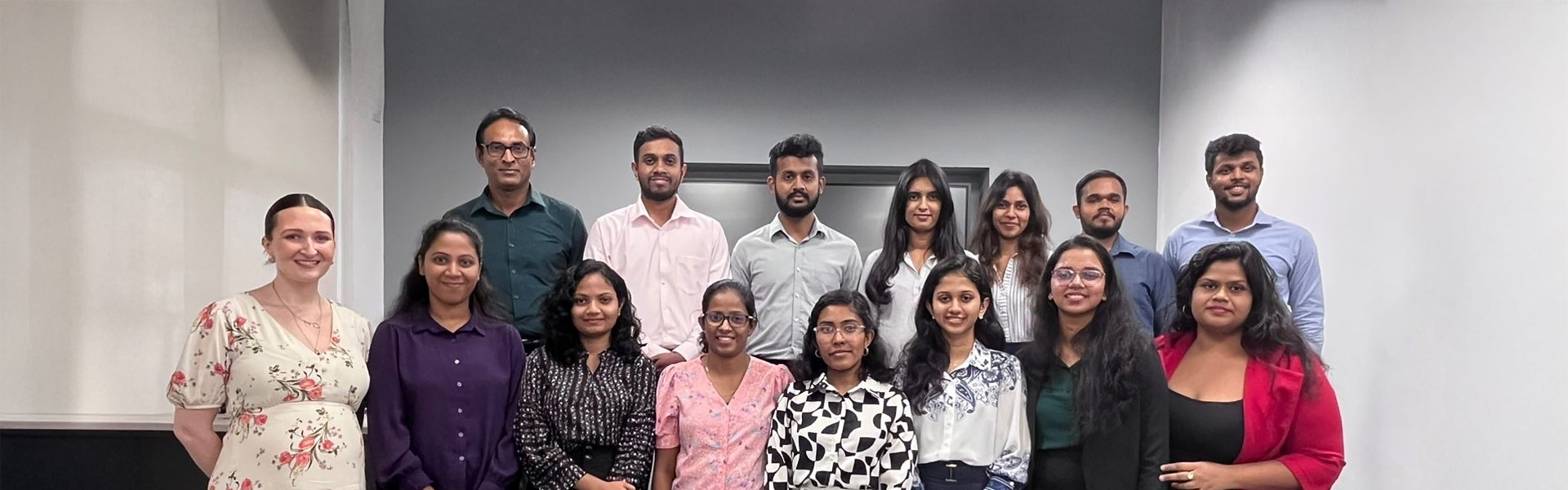
“Corporate English programmes” or “Business English programmes” are quite different from your everyday Spoken English programmes, as they often begin with competent professionals who are best at their jobs and know what they want to convey, but get tongue-tied when reaching the point of how to say it in English. This was the starting point of our recently concluded Business English for Professionals programme conducted for Global Marine Group.
Before setting out to design the programme, we had an initial assessment, and the two most recurring answers were that “we are not using English that much” and “I can’t find the correct words when I speak”, from which we streamlined that insufficient use of the language was the root cause of both these issues. Another issue was the mental stigma of making mistakes in front of their colleagues and humouring them.
So, as the first step, we, as the trainers, made it clear that this programme was not about becoming the perfect speaker or having perfect grammar; rather, it was about using their existing knowledge and building their confidence to communicate clearly and professionally.
The next step was to craft the programme. We, as trainers, meticulously created each session, drawing on the participation and insights of experts from Global Marine Group, because we wanted each session to be as relatable to them as possible.
Session topics started with introductions and small talk, and progressed to complex topics such as handling complaints and Global English. In these sessions, participants were provided with real-life business simulations related to both the department they worked in and the incidents they encountered on a typical day in their jobs. Take it from one of our participants;
“I found the role-plays, discussions, and presentations most useful, as they helped me build confidence and practice speaking naturally in real workplace situations.”
The sessions were specifically made to be interactive and speaking-focused, encouraging participants to practise in a supportive environment where mistakes were seen as part of the process. Apart from that, we as trainers worked at the ground level with the participants, which made us more approachable as we broke away from the mould of a conventional teacher-led setting. Rather than being strict evaluators, we were constant cheerleaders who offered them the extra help that they needed to perform well.
Ultimately, we noticed that these sessions offered participants a safe space to communicate freely without second-guessing themselves. Rather than correcting every mistake, the focus remained on effective communication. As the sessions progressed, we witnessed how hesitation slowly turned into participation, and participation into confidence.
A few weeks into the programme, we were informed that one of the participants had confidently introduced himself in English during a meeting with the board of Directors. When we looked into the participant, it was a pleasant surprise for us as well, because this particular participant was noticeably reserved during the early sessions; he did not speak much, even in his mother tongue, and speaking English was especially intimidating for him.
We received overwhelmingly positive feedback for this incident, and the moment stood as a powerful reminder of what consistent practice and encouragement can achieve. It was a quiet but significant breakthrough.
Across the group, similar changes began to emerge. Participants spoke more freely, engaged more actively in discussions, and expressed their ideas with greater clarity and assurance with minimal interference from the trainers. These were not overnight transformations, but steady improvements built through purposeful practice.
We believe the key to a successful corporate English programme is an emphasis on practicality, relevance, and humanity. When professionals are given the right space to practice, coupled with genuine encouragement, confidence follows naturally. In light of the programme's conclusion, we’d like to extend our gratitude for the commitment and trust shown by the Global Marine Group and the employees who participated in and contributed to the success of this initiative. Moving forward, programmes like these will continue to shape our beliefs and approach in delivering purposeful English training for professionals.
